Sunday, September 04, 2022

SpaceX introduces affordability based Starlink pricing

GDP per capita, 2022 (Source)

These are the first Starlink price or service changes, but they won't be the last.

When SpaceX announced the price of the Starlink service, Elon Musk said it would be the same everywhere but I wrote that eventually it would be priced to be affordable in different nations. (If you predict enough things, you are bound to get something right).

The fixed cost of a satellite Internet constellation is high -- satellites are expensive to make and launch -- but the cost of adding and servicing a new customer is low and the market is global. At the initial price of $500 for the terminal and $99 per month for the service, there would be unused capacity in poor nations and contention for limited capacity in wealthy nations.

Earlier this summer, we were seeing complaints that Starlink sales were straining capacity in parts of the U.S. and Canada, and last month SpaceX announced variable pricing and an optional service cap in France. That was dubbed a pilot study, but since then the variable pricing dam burst, and customers in many nations received notification of permanent price cuts because of "local market conditions" and "parity in purchasing power." 

A 56% service price cut in Brazil
This change has been discussed on Reddit and a user established a crowd-sourced database of Starlink terminal and service charges by nation. As of this writing, the database contains complete records for thirty-nine nations. The average terminal price, including shipping, is $493.99, and the average monthly service charge is $72.65. In eight nations, the service charge has been cut by over 50%. In general, service charge cuts are greater than terminal price cuts since SpaceX is already subsidizing terminal purchases. (The database is currently a shared Excel spreadsheet, but I would like to see a cleaned-up version as a page on Wikipedia or better yet on the Starlink Web site).

These are the first Starlink price or service changes, but they won't be the last. The technology, the product mix, and the market will continuously change, and SpaceX will eventually encounter competition in the non-residential satellite broadband market. They will need data-driven Ph.D. marketing managers to set prices, not MBAs.

Update 1/3/2023

Source
Ookla reports crowd-sourced speed tests for Starlink every quarter. As seen here, performance in the U. S. has dropped in the last three reported quarters. 

Wednesday, August 17, 2022

OneWeb and Intelsat Sign the First Multi-Orbit Broadband Agreement – More to Come

A Boeing 777 connected to OneWeb LEO and Intelsat GEO satellites during this test flight. (Image from demo video).

Last week, OneWeb announced the first of what I expect to be many multi-orbit deals. 

LEO, MEO, and GEO satellites (not to scale)
Last October, I reviewed multi-orbit tests and plans of several low Earth orbit (LEO), medium Earth orbit (MEO), and Geostationary (GEO) broadband satellite companies, and quoted Neil Masterson, CEO of LEO operator OneWeb as saying "Interoperability with GEO satellites must happen -- it's common sense ... Customers don't care whether it's a LEO satellite or a GEO satellite -- all they want is connectivity." 

In June, OneWeb and Stellar demonstrated in-flight connectivity to a Boeing 777 jetliner, achieving a download speed of 260 mb/s. Ben Griffin, OneWeb vice president, says the speed is constrained by the current aircraft antenna and their satellite spot beams are capable of 500 mb/s. (777 carrying capacity is from 312-388 passengers).

Last week, OneWeb announced the first of what I expect to be many multi-orbit deals. Intelsat, an established GEO provider of in-flight connectivity, will distribute OneWeb's forthcoming LEO in-flight connectivity. The companies expect the multi-orbit solution to be in service by 2024 and they promise seamless connectivity with OneWeb LEO satellites for latency-sensitive applications and Intelsat GEO satellites for applications where latency is not critical. 

Note the emphasis on the word seamless above. The transition between constellations must be transparent to users. Automatic routing based on packet type is required and is well understood and implemented in different systems. For example, OneWeb had previously demonstrated LEO-GEO connectivity with Hughes using their ActiveClassifier technology that "automatically identifies different types of data and apps and tags them with a specific priority setting using advanced heuristics algorithms."

It is likely that OneWeb will soon be interoperating with three GEO operators. They have demonstrated seamless LEO-GEO integration with Hughes, have agreed to partner with Intelsat on in-flight connectivity, and have signed a memorandum of understanding to be acquired by GEO operator Eutelsat. This is the sort of interoperability promised by Neil Masterson. 

Will we see multi-orbit connectivity standards?

This is the first LEO-GEO broadband effort, but I expect many others because they solve problems for both LEO and GEO Internet service providers. LEO service providers are capacity constrained. SpaceX's Starlink LEO service is currently over-subscribed at some locations in the U.S. and Canada. They will add capacity by launching improved satellites and offloading latency-tolerant traffic to a GEO partner, freeing capacity for more valuable latency-sensitive traffic

GEO operators will seek LEO partners or, as in the case of Telesat, develop their own LEO constellations to provide low look-angle connectivity in polar regions and to serve latency-sensitive applications. Dan Goldberg, CEO of GEO ISP Telesat, acknowledged this when explaining why they were creating their own LEO constellation saying, “I guess it’s something we had to do. For us, you have no choice but to land at LEO.”

This post focuses on one application, in-flight connectivity, and one LEO operator, OneWeb, but this is just the start. For example, Intelsat and OneWeb have also been working on military applications and Viasat is working on multi-orbit solutions with several non-GEO operators or prospective operators and conducting a multi-layer satellite communication study for the European Space Agency. Intelsat is reportedly in merger talks with MEO operator SES. The elephant in the room is SpaceX. Elon Musk is a big fan of do-it-yourself integration, but it's hard to imagine SpaceX operating its own GEO satellites -- partnering with and launching satellites for a GEO operator seems more likely. I wonder whether China SatNet is looking for a GEO partner.

Update 3/11/2023

OneWeb considers multi-orbit interoperability a strategic capability and now Eutelsat has signed a multi-million euro deal to provide their GEO capacity and OneWeb's LEO capacity to Intelsat. 

OneWeb is expected to launch the final batch of its first-generation LEO satellites this month and be in full operation in a few months. Eutelsat operates a large constellation of GEO satellites as does Intelsat.

This gives OneWeb a lead over SpaceX and other potential LEO providers of aircraft connectivity. It will be interesting how the handoffs between LEO and GEO satellites are handled, how it affects the passenger user interface, and how well in-flight connectivity performs in a large, fully booked airliner.

Update 11/12/2023

Eutelsat has said full-scale OneWeb Gen 2 satellites would be bulkier, able to provide three to five times more capacity, and would only be around 300 in number because Eutelsat’s geostationary fleet would help cover high-demand areas. However, last year Eutelsat ordered a multi-orbit compatible geostationary broadband satellite serving the Americas, implying that multi-orbit connectivity would not be available with its legacy satellites.

Update 12/1/2023

Intelsat has signed multi-orbit deals with both SpaceX and OneWeb. The flat panel antenna on this vehicle can communicate with both Intelsat's GEO satellites and SpaceX's Starlink LEO satellites. This ruggedized antenna is only available for DOD and some other government agencies for now. Intelsat will also offer multi-orbit service with Eutelsat-OneWeb LEO satellites on 500 American Airlines regional jets starting in early 2024.


Friday, August 05, 2022

SpaceX Starlink's variable pricing pilot in France is good business and good karma.

An idle satellite over Africa is neither generating revenue for SpaceX nor serving the population.

Source
Starlink is available in 37 nations and the price for best effort service was the same everywhere until August 3 when variable pricing with throttling became available in France. I predicted they would eventually shift from uniform to affordable pricing some time ago, but why did they do it now?

Starlink first became available in the U.S. and Canada and sales are beginning to outrun the available capacity. At oversubscribed locations, the best effort is unacceptable, median performance is slipping overall, and the recent announcement of new, non-residential services will exacerbate the problem. Launching new satellites will ease today's congestion and capacity will increase rapidly when version 2 satellites are launched, but demand will always be uneven and capacity limited,

Under the pilot program in France, the monthly service fee drops from €99 to €50/month. A Fair Use policy will begin in October. Users who consume 250 GB/month or less will be prioritized. Those who exceed 250 GB/month will still have access to unlimited data but may experience slower speeds during times of network congestion. They can also choose to purchase additional data to reclaim priority status for €10/100GB.

This is a pilot program, and it will be carefully studied and tweaked. For example, they will be able to vary the congestion threshold criteria, the performance goals of prioritized and limited service, and the frequency of checking a cell to determine whether prioritization is required. SpaceX may have selected France for the pilot study because it is demographically similar the U.S. and Canada.

It is not surprising to see Starlink begin to transition to variable pricing. When I was a child, phone call charges were reduced on Sundays and during the evening and mobile phone companies offer variable price plans today. 

Starlink service is currently available in thirty-seven nations, four of which are in Latin America. None are in Africa or Asia and an idle satellite over Africa is neither generating revenue for SpaceX nor serving the population. Ideally, the full capacity of the satellite constellation would be utilized at every location and time because the marginal cost of serving a new customer when and where there is excess capacity is near zero. (SpaceX does not offer residential installation or support). That optimal goal is unreachable, but I would be surprised if, eventually, we do not see pricing for affordability -- different service plans and terminal prices in different countries. 

(For a related discussion see this post).

Thursday, July 28, 2022

Starlink sales are straining capacity in parts of the U.S. and Canada

OOKLA Speedtest results for the U/ S. and Canada (source)

On June 5th Elon Musk said SpaceX had nearly 500,000 customers in 32 nations and 9 languages. By now there must be 500,000 customers most of whom are in the U. S. and Canada and their performance is suffering.

In the first quarter of this year, OOKLA reported that the median Starlink download speed fell from 104.97 to 99.55Mbps in the U.S. and from 106.64 to 97.4 Mbps in Canada. Upload speed dropped from 12.5 to 9.3Mbps in the U.S and from 12.82 to 10.7 in Canada and has been dropping slowly since the first quarter of last year in both nations. Median latency increased from 40 to 43ms in the U.S. and from 51 to 55ms in Canada during the year.

A few of the first-quarter customers were small businesses, rural schools or clinics, etc. but the overwhelming majority are residential. OOKLA hasn't published second-quarter results yet, but they may be worse because SpaceX has entered several non-residential markets -- business, roaming (RV), and maritime -- during the quarter. They have also deployed mobile roaming on trains and vehicles in Ukraine and they are testing aircraft connectivity so we may soon see these services offered commercially.

There are also anecdotal reports of declining performance like this one on Reddit Starlink discussion: "Speeds have slowed significantly. No obstructions, and support is no help. KY, USA." This post describes one person's experience but has 103 upvotes and 142 comments, many describing similar experiences. Note that the user found that "support is no help" and future customers will need more support than today's residential early adopters who tend to be technically proficient. SpaceX will soon be competing with OneWeb in the non-residential markets and this sort of experience and publicity will harm Starlink's reputation.

That's the bad news. The good news is that SpaceX is rapidly adding capacity. They are launching satellites at an unprecedented rate and the Version 1.5 satellites they are now launching have inter-satellite laser links. Furthermore, when Starship is ready, it will be capable of launching version 2 satellites which Elon Musk says will offer nearly an order of magnitude more data throughput than the version 1 satellites they will eventually replace. Maybe they should slow down sales in oversubscribed areas for a while.


Saturday, June 18, 2022

Ten SpaceX Starlink updates

Starlink availability map (Source)

Starlink now has nearly 500,000 users and is available in 32 countries and nine languages. It is either available, wait-listed, or coming soon in every nation except Afghanistan, Belarus, Cuba, China, Iran, North Korea, Russia, Syria, and Venezuela.

There are now 15,000 Starlink terminals in Ukraine with service throughout the nation through connections to ground stations in Poland, Lithuania, and Turkey and they have made a significant contribution in the war with Russia. For better or worse, they have demonstrated the value of low-Earth orbit satellites in combat.

A Chinese research paper called for the development of systems to track, monitor, and disable Starlink satellites. Quotes include "The country needs to be able to disable or destroy SpaceX’s Starlink satellites if they threaten national security" and "A combination of soft and hard kill methods should be adopted to make some Starlink satellites lose their functions and destroy the constellation’s operating system.” The paper in Chinese is here and an English translation is here.

SpaceX has begun launching version 1.5 satellites with optical terminals and Elon Musk says they will be operational by the end of the year. They are about to run a test using laser links to provide connectivity in Polar regions (above 53 degrees latitude) where there are no ground stations. It will take some time for them to connect all the satellites in the constellation in an orthogonal mesh, but this simulation predicts a ~2x latency improvement over long links when the mesh is complete. 

Astronomers worry about reflections from larger Version 2
satellites. (source)
The version 1.5 satellites do not have visors that reduce reflection which interferes with astronomical observation because they were incompatible with the laser terminals. Principal engineer David Goldstein says they're working on technology that will make version 2 satellites ten times dimmer than Vantablack paint.

SpaceX tested Starlink roaming in the US and later in Ukraine and they have now rolled out two new commercial services, Starlink for RVs, a low-priority service that can be paused, and Residential Starlink + Portability which provides priority service at your registered residence, but low-priority service when away. Elon Musk reported that they had 30,000 Starlink-for-RV orders within three weeks of its availability.

Service is not yet offered for moving vehicles, but it has worked well in the tests mentioned above and in Ukraine. Since the technology works, they may be delaying availability until they have a capacity allocation/pricing scheme, or they might be working on a new terminal. How long will it be before they have a terminal for Tesla and other cars and trucks? (They will eventually be competing with Geely for automobile connectivity).

Starlink's new business service is intended for locations with up to twenty users. It includes a $2,500 terminal with a high-gain antenna and promises download speeds of 150-500 Mbps and latency of 20-40ms. It includes 24/7, prioritized support and a publicly routable IPv4 address, but does not offer on-site support or a guaranteed service-level agreement.

Starlink began by serving the consumer market, but they have begun selling to air and ship lines. Starlink has contracted to offer service on JSX and Hawaiian Airlines and has applied to serve Royal Caribbean cruise ships. The airlines will use a new high-gain antenna that can deliver 500 Mbps down and40-50 up with 400w peak power consumption. I'll be curious to see what sort of terminal they will have for cruise ships with thousands of passengers but little nearby congestion when at sea.

SpaceX published a detailed description of its approach to space sustainability and safety in a February 22 post on their Starlink Updates blog. The post reports that Starlink satellites made 3,300 autonomous maneuvers to avoid collision during the second half of 2021 and describes the policies and technology Starlink uses to avoid collisions, including "ducking" -- retracting the solar panel and orienting their attitude to have the smallest possible cross-section in the direction of conjunction. Unfortunately, SpaceX cannot solve the space debris problem unilaterally and all debris objects cannot be tracked from Earth, though improved tracking from satellites might help and at least one company, Privateer, is exploring that possibility.

(Click here for a Starship update).

Update 6/29/2022

Royal Caribbean has run an informal test of Starlink aboard one of their cruise ships. Starlink significantly outperformed geostationary satellite service with a Ping time as low as 38ms and up and download times as high as 77/03 and 15.72 mb/s. That is fast enough to stream video or teleconference but does not shed much light on what to expect when connectivity is distributed throughout a ship with 5,000 passengers and a crew. It will be interesting to see how LEO service on ships ends up competing with O3b Mpower MEO connectivity

Update 6/30/2022

The Minister of Digital Transformation of Ukraine, Mikhail Fedorov, said that in the future, Internet from Starlink will appear on Ukrainian trains and it has been demonstrated in a successful pilot test in which Starlink technicians were surprised that it worked at high speeds. Ukraine’s Special Communication and Information Protection State Service chief Yurii Shchyhol said Starlink will be available in all Ukraine Railway trains by the end of 2022.

It looks like SpaceX is using Ukraine as a testbed for connectivity in moving vehicles and as a war tool in general.

Update 7/1/2022

The FCC has authorized Starlink connectivity to RVs, large trucks, ships, and planes. They expect to be on planes "very shortly" according to Jonathan Hofeller, Starlink's commercial sales chief. Elon Musk has said he didn't see "connecting Tesla cars to Starlink, as our terminal is much too big." That's true for today's terminals, but I wouldn't rule it out in the future -- by SpaceX or, as mentioned above, Geely.

Update 7/7/2022

Starlink Maritime is available now near coasts where they can reach terrestrial ground stations. Coverage will expand in the fourth quarter of this year and expand to global coverage in the first quarter of next year as more satellites are equipped with inter-satellite laser terminals.


With a price of $5,000 per month and a one-time hardware cost of $10,000 for two high-performance, ruggedized terminals for a download speed of "up to" 350 Mbps, they are marketing to merchant vessels, oil companies and Russian oligarchs with Yachts, not the few thousand customers on a Royal Caribbean cruise ship. Latency will on average be greater than terrestrial Starlink due to hops through inter-satellite links. Customers can pause and resume service at any time, but when they turn it on, they will have to pay for the month.

For those who might be worried about performance in severe weather and rough seas, SpaceX points out that Starlink is currently being used to get high-quality video of rocket landings at sea, providing continuous coverage next to engines capable of generating up to 190,000 pounds of force.

Update 7/15/2022

The first phase of Starlink launches consists of 4,408 satellites in five orbital shells. Over half of those satellites are in orbit already, but just last week they launched the first forty-six of the 520 operational V 1.5 satellites that will be in near-polar orbits with inclinations of 97.6 degrees.

Phase 1 orbital shells -- 4408 satellites

These polar orbit satellites will enable them to offer global coverage on land and sea as described above.

Update 8/31/2022
Following on the trial described above, Royal Caribbean has agreed to provide Starlink connectivity on their entire fleet of 63 ships. They will begin outfitting ships immediately and expect to have them all online by the end of the first quarter of next year. 
Other cruise lines connect through geostationary satellites, but Royal Caribbean has been using SES middle Earth orbit satellites on two of their ships. Starlink LEO satellites will provide better performance and offer full global coverage, which the others cannot.


Monday, June 13, 2022

Can SpaceX launch version 2 Starlink satellites this year?


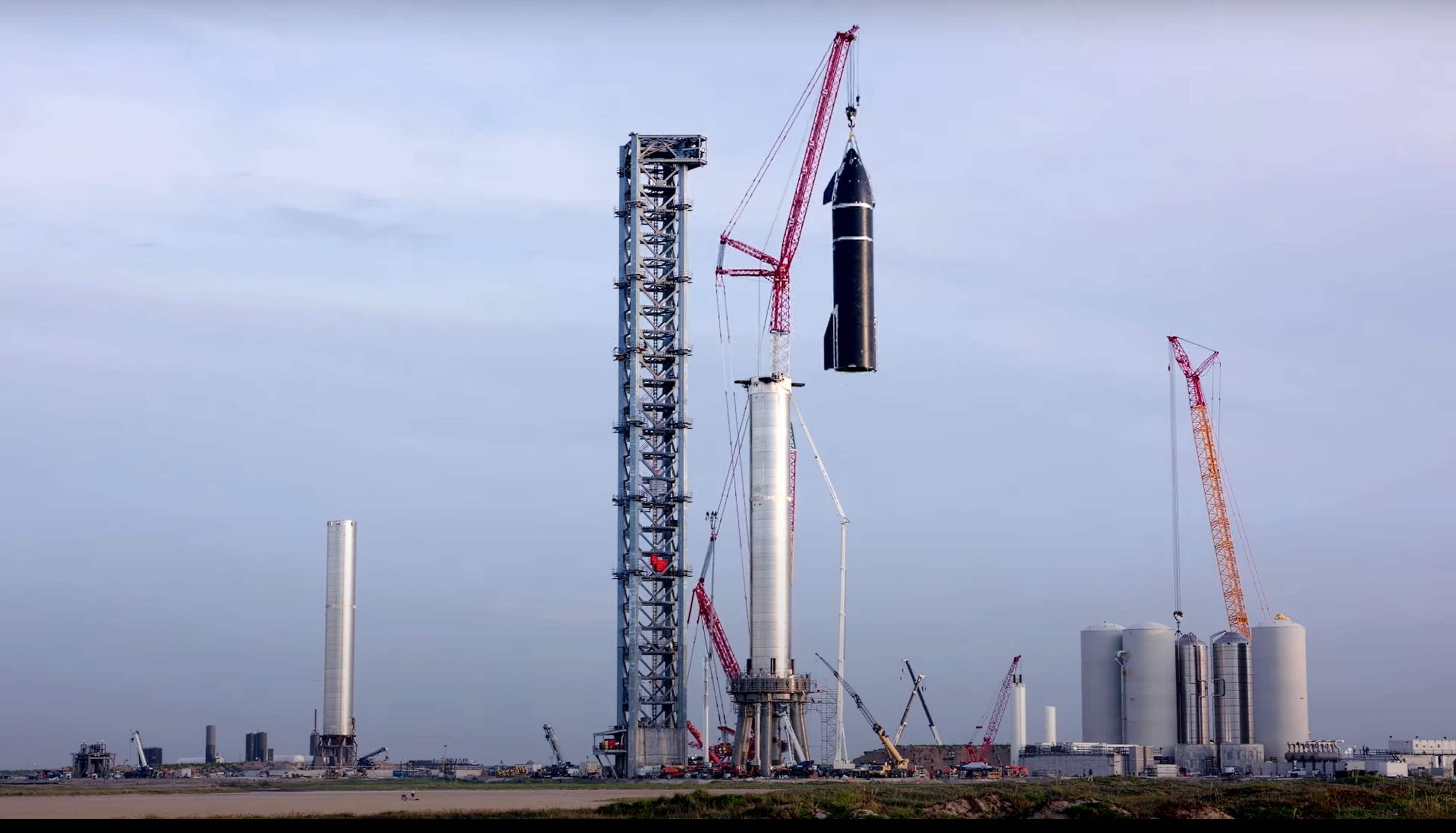
A Starship spacecraft being lifted onto a Super Heavy booster

The answer to the question in the title depends on the availability of SpaceX’s new Starship spacecraft and Super Heavy booster rocket, collectively referred to as Starship. Elon Musk says he is highly confident about getting Starship to orbit this year. He also says, “At Space X we specialize in converting things from impossible to late.” 
Starship is critical to Starlink because the version 2 satellites are seven meters long and weigh about 1.25 tons and the current Falcon 9 rockets have neither the cargo volume nor the mass-to-orbit capability to economically launch them. As Musk put it, they "need Starship to launch and fly frequently or Starlink version 2 will be stuck on the ground." 
Version 2 satellites will be ejected
using a "Pez dispenser" mechanism
modeled after industrial pallet
stackers.
Musk has said the performance of the version 2 satellites will be nearly an order of magnitude better than that of the current satellites and they will include inter-satellite laser links. He did not elaborate on his order of magnitude estimate and it will be interesting to see how they handle a mixed-satellite constellation, but all the analysts predicting the profitability and capacity of Starlink will have to go back to work. The projected improvement also reminds us of the advantage of short satellite life.
Today's terminals will work with the version 2 satellites, but performance will be better with a new terminal that is being developed. Perhaps Starlink will allow current terminal owners to trade them in on Version 2 terminals.
But can SpaceX launch the remaining 9,500 approved satellites or the 30,000 that are awaiting approval in a timely manner? They can if they achieve rapid reuse of Starships. The total world mass-to-orbit to date is 16,000 tons. Musk estimates that a single Starship launching three times a day could put 109,000 tons in orbit in a year.
Today they are doing about one launch per week and the current average turnaround time for boosters is 21 days -- can they reuse a Starship three times a day? Boosters fly for about six minutes before returning to Earth and SpaceX plans to have them land back on the launch pad ready for refueling, installation of a spaceship, and re-launch. (They will need more spaceships than boosters). 
During an interview/tour of the Starbase manufacturing and launch site in Boca Chica, Texas, Musk spent time at a launch pad discussing the 10-second booster landing and capture sequence and the design decisions it entailed with Andrew Krebs, Director, Starship Launch Engineering. It was apparent that various tradeoffs are still being evaluated and change is constant. Musk said there is a good chance they will fail to capture the booster on the upcoming orbital flight. (Recall the "unscheduled disassembles" tape of attempts to safely land Falcon boosters). 
They spent some time on the tour at an assembly bay talking about Starship design and manufacturing. Since they need Starship to launch and fly frequently, they expect to eventually have ten or twelve manufacturing bays and Musk expects to manufacture a new spaceship and booster every month. (He estimates that they will eventually have 1,000 Starships for building a city on Mars).
Raptor 1 vs Raptor 2 (source SpaceX)
The greater mass of the Starship and satellites requires more powerful rocket engines than SpaceX is currently flying so Starship will use thirty-nine Raptor 2 engines -- 33 for the booster and six for the spaceship. The Raptor 2 is more powerful than its predecessor, has a much simpler design, and costs about half as much. They had trouble manufacturing them at first but now expect to make seven or more per week.
If all goes well, Musk estimated the variable cost per orbital flight as being a few million, "maybe" as low as one million, dollars. 
In addition to engineering and manufacturing, there are regulatory hurdles. The Federal Aviation Administration (FAA) requires an environmental review before they can do the first orbital test launch and they are currently being required to make over seventy-five environmental adjustments to do an orbital launch in Texas. I have no idea how long these adjustments will take, and Musk has considered moving the first orbital flight to Florida. You can see the latest FAA report here.
There are a lot of unknowns and precisely landing and catching a 68-meter long, 9-meter diameter rocket might turn out to be impossible, but SpaceX specializes in converting things from impossible to late.
---
This post is based on a Starship update talk Musk gave at Starbase in Boca, his recent all-hands company presentation, and videos of interviews with Tim Dodd, the "Everyday astronaut," conducted while touring Starbase. Those videos are here, here, and here. I've only selected some Starlink-related material from these sources. Check them out to learn a lot more about Elon Musk and rockets.

(Click here for a Starlink update).

Update 6/17/2022

The FAA has concluded that continued launches "would not significantly affect the quality of the human environment" and Elon Musk, who has said there would be no more "hops," expects to attempt a Starship orbital launch in July. Musk thinks they will be able to satisfy the FAA quickly and get on with the orbital launch test. He tweeted “There will probably be several launch countdowns before we pass all the abort triggers, but hopefully the first countdown is this month.”

Update 8/4/2022

Alternative plan -- booster returns to launch pad
The answer to the question in the title is "no," but they are pushing hard and next year is a possibility. Version 2 satellites are already at Starbase, and the next Starship launch will try to reach orbit. It would be surprising if the first attempt reached orbit, but Elon Musk is confident that they can do it within twelve months. Whenever they do it, if all goes well, they will try to land the booster on the launch pad rather than allowing it to fall into the ocean. 
Musk previously predicted that the first orbital test would be as early as last January, so he is nearly a year behind schedule, but that prediction did not include an attempt at landing on the launch pad. 

Sunday, May 29, 2022

Putin's iron firewall is porous

Russians can see more of the Ukraine war after three months than we saw during the entire Vietnam war.

In 1946 Winston Churchill declared that Russia had lowered an iron curtain across Europe and in 2022 Vladimir Putin created an iron firewall between the Russian Internet and media and the rest of the world but, like its precursor, it is porous. Information wants to be free.

As of May 26, Russia had blocked access to 1,548 domains, including 1,142 news sites and 287 digital-resistance sites. The distribution of domain locales is also skewed -- Ukraine 647, the US 523, and Russia 218 are the top three. Given this blocking, it is not surprising that Russians turned to virtual private networks (VPNs).

As shown here, Russian interest in VPNs as measured by Google searches for the term "VPN" has spiked twice.  The baseline level is roughly 5% of the peak period after Russia's invasion of Ukraine. The earlier spike -- 26% of the peak -- occurred when the US sanctioned Russia for interference in our 2016 election.

Daily downloads of the ten most popular VPNs
Daily downloads of the 10 most popular VPNs also spiked in the days after Russia invaded and Russians are using those VPNs. Psiphon, a popular VPN, averaged 867,400 unique daily users during the twenty days beginning May 2 and it has risen slowly, but steadily since the invasion to 929,000 on May 27 and the users on May 28 made 4,755,000 connections.

Several messaging services are currently unblocked in Russia. The most surprising to me is Telegram which has around 38 million Russian users visiting it at least once a month. If they have the same level of access as I do, they can see Washington Post coverage of the war, President Zelensky's standing-ovation addresses to parliaments and other important audiences, news and graphic photos, and videos of Russian war crimes. and follow the activities of The Ukrainian IT Army. 

When Russia celebrated Victory in Europe Day, an audacious hack occurred. Hackers placed fake stories on Lenta.ru, a popular Russian news site. The hack was quickly discovered and corrected, but not before the Internet Archive backed it up. Below is a Google Translation of a portion of the hacked front page. Note that the hack went beyond the front page -- each front-page headline linked to a complete article.

Many Ukrainians speak Russian and have friends and family members in Russia. They can use the Internet to tell their friends and families what they have witnessed, and you can do the same using a messaging service created by Squad 103 a group of Polish programmers.

The service, which sent over 100 million messages in less than two months, allows anyone anywhere in the world to message cellphones and email addresses of random Russian individuals and companies. To send a message, you select a messaging application -- SMS, WhatsApp, email, Viber, Telegram, or phone call and write or select an appropriate message.

(I'm not sure how or if it is possible to distinguish between the activity of Squad 103, the Ukrainian IT Army, and Anonymous in Ukraine).

Ukraine is also using facial recognition to identify Russian soldiers who have been captured, killed, or are caught in the act of looting or other war crimes. They follow up by investigating the war crimes and informing the families of dead soldiers. They defend the latter by saying they offer the soldier's families the possibility of claiming the bodies and fighting Russian propaganda, but they say that is effective in only about 20% of the cases.

I've focused on the Internet, but mass media is also vulnerable. The Economist reports that the state controls the country’s television channels, newspapers, and radio stations, giving "guidance" as to what and how to cover. But, despite Putin's efforts, the truth sometimes appears in mass media.

The sign reads "NO WAR. Stop the war. Don't believe
the propaganda. They are lying to you here."
The most theatrical example was when Marina Ovsyannikova, an employee of Russia's state TV Channel One, interrupted a live newscast with a handwritten No-War poster. She was arrested, but surprisingly, fined $280 and freed. She is now working as a correspondent for the German Die Welt newspaper, reporting from Ukraine and Russia.

Military analyst & retired colonel Mikhail Khodarenok surprised fellow panelists by arguing with Olga Skabeyeva, the anchor of Russia's “60 Minutes” talk-show program. He said the war was going poorly and would get worse, arguing that a million patriotic Ukrainian soldiers were ready to fight to defend their nation while Russian army morale was low, Russia is geopolitically isolated, and Ukraine was well supplied by the west. My favorite moment in the argument is when Khodaryonok invoked the "classics" of Marxism-Leninism in refuting Skabeyeva when she challenged the professionalism of the Ukraine fighters. Two days later, on the same program, Khodaryonok predicted an ultimate Russian victory.

The most innovative mass-media hack occurred on Victory in Europe Day when every program listing in the online TV guide service was changed to read (in translation) "On your hands is the blood of thousands of Ukrainians and their hundreds of murdered children. TV and the authorities are lying. No to war".

Writing this, I am reminded of the Vietnam war. Criticism of the war was freely available in print and electronic media in the US and public protests were common. It was nothing like Russia today. But the rate and quality of anti-war information reaching Russia today far exceed those of the Vietnam war. 

We saw iconic photographs -- a terrified nine-year-old girl running screaming and naked after she was napalmed or Major General Nguyễn Ngọc Loan calmly shooting a bound prisoner in the head at point-blank range. Equally disturbing photos from Ukraine are posted to Telegram every day. We eventually learned of the Mỹ Lai massacre in Vietnam, but Russians can see Mariupol and Bucha today. (Do a Google Image search for Bucha atrocity or go to President Zelensky's Telegram channel and search for Bucha).

Update 7/18/2022

The Open Technology Fund, a U.S. government-funded nonprofit, is supporting three firms that offer their VPN service in Russia for free -  nthLink, Psiphon, and Lantern and it's paying off. On May 27 there were 929,000 unique daily users of the Psiphon VPN in Russia, and it has grown steadily. It was 2.113 million on July 18th.

Update 8/27/2022

To celebrate Ukraine’s Independence Day, dozens of IP cameras with speaker outputs have been hacked to play patriotic music in Russia as well as occupied Crimea and Donbas. Here are a couple of stills from the video.


Monday, May 02, 2022

Optimistic speculation on what Elon Musk might do with Twitter

Elon Musk is a self-proclaimed "free speech absolutist" which leads some to worry that Twitter will be open to the sort of thing one finds at gab.com if his purchase of the company is completed. I have no idea what Musk plans to do with Twitter but let me offer some optimistic speculation.

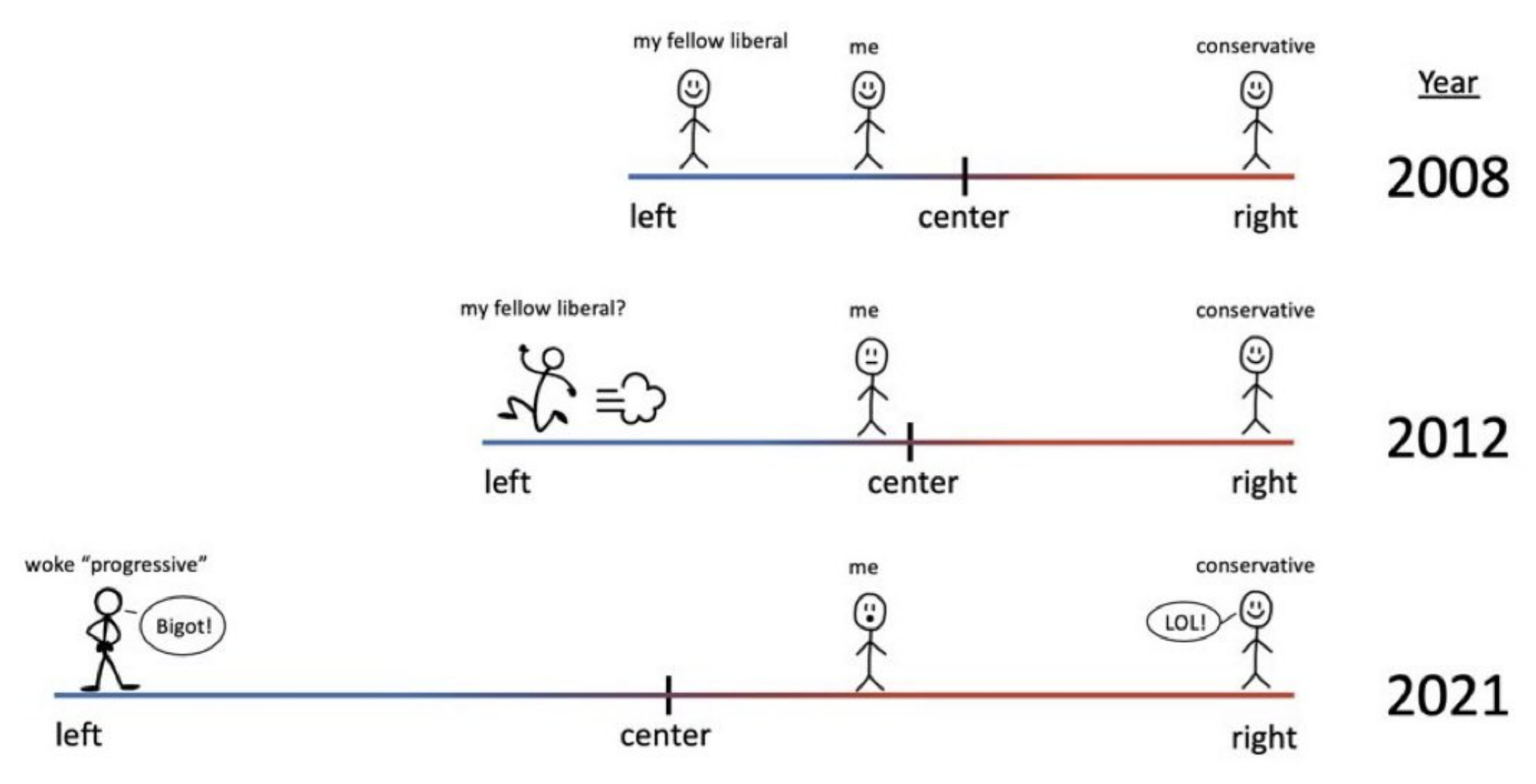
For a start, I don't believe Musk will use Twitter to advance right-wing candidates or policy. He recently tweeted "I strongly supported Obama for President, but today’s Democratic Party has been hijacked by extremists." He also tweeted a cartoon showing him not changing his views since he supported President Obama in 2008 while the left and right have diverged. Don't forget that Musk (and many others) resigned from Trump's American Manufacturing Council and Strategic and Policy Forum shortly after they were formed. 

Musk sounds more like a pro-Obama centrist than a right-wing extremist.

The algorithms

Musk has said he wants "to make Twitter better than ever by enhancing the product with new features, making the algorithms open source to increase trust, defeating the spambots, and authenticating all humans.” I am all for defeating spambots and authenticating (not "identifying") humans but open sourcing the algorithms that rapidly decide which tweets to present to a given user is insufficient. The goal, the objective function, of current social media algorithms is to increase engagement and therefore advertising revenue and that has had catastrophic side effects.

In the early 1990s, the US National Science Foundation Network, which was central to the nascent global Internet, had a policy limiting acceptable use to supporting open research and education. Most of us were naive when that policy was phased out, but by 2011, when Eli Pariser published The Filter Bubble, the danger of an Internet financed by personalized advertising was becoming clear, and terrorists were using the Internet for operations and recruiting. In 2014 Aljazeera was asking whether Facebook was amplifying hate speech and violence against the Rohingya and there was evidence of Russia hacking US elections as early as 2008. That was nothing compared to subsequent presidential elections or Russia's Ukraine war propaganda. 

The objective function of today's social media algorithms must be changed -- for example by adding goals like reducing political division or increasing voter participation rate. This is an ill-defined, challenging problem, but that is nothing new for Musk. It would also reduce Twitter's revenue and Musk is a businessman, but he is motivated by more than increasing profit and shareholder value.

Musk has the technical skill in his current companies to implement and maintain Twitter algorithms. One of his companies, Neuralink, is working on understanding the brain and SpaceX satellites and Tesla cars rapidly process large amounts of data to make decisions to avoid collisions. He and his employees are well versed in decision-making technology, but he will need people with backgrounds in marketing, social science, and politics to revise the algorithms to incorporate social goals. 

Musk is a manufacturing and design genius and a manager with an unprecedented span of control who is nevertheless deeply involved in project details (as illustrated in this interview), but he lacks the temperament and judgment to revise the Twitter algorithms. (He has described himself as autistic and is prone to unrealistic predictions and sophomoric tweets).

Musk needs trusted advisors if he plans to revise the Twitter algorithms. How about President Obama? He would bring empathy, wisdom, and political skill to the project, and, as evidenced in a recent talk at Stanford University, he understands the problems with today's social media algorithms and considers them to be a threat to democracy as well as causing more concrete damage like killing people by spreading COVID misinformation.

Musk and Obama have complementary skills, and if social media can be modified and saved, I can't think of a better team than them to do it. If Musk is unwilling or unable to engage President Obama as an advisor, how about a podcast like the one Obama did with Bruce Springsteen? Coming back to reality -- Musk should at least invite Obama to visit Twitter and give a talk to and engage with the Twitter staff. 

Update 5/7/2022

I learned something after writing this post that has increased my optimism. 

Twitter has a company-wide initiative called Responsible Machine Learning (ML), based on the belief that "responsible technological use includes studying the effects it can have over time" and the fact that with hundreds of millions of Tweets per day Twitter's design can have unintended consequences. 

Twitter's Machine Learning, Ethics, Transparency, and Accountability (META) group is responsible for understanding the impact of ML decisions and applying what they learn to improve Twitter. In 2021, Twitter co-founder and CEO Jack Dorsey and the board of directors made Responsible ML one of Twitter's main priorities. META group funding was increased, and prominent researchers were hired. They have access to Twitter's data, the decision-making algorithms, and the people who design them.

But, isn't Elon Musk a "free speech absolutist?"

Yes, he tweeted that, but how much thought went into the tweet, and what exactly does he mean by it? I don't know, but I do know that Musk is iconoclastic and willing to question himself. When speaking or being interviewed, he seems at times to pause, to debate with himself before making a statement or giving an answer. During a recent in-depth interview, he listed his engineering principles, beginning with a recognition that “Everyone’s wrong. No matter who you are, everyone is wrong some of the time.”

I can't think of any team better qualified to mitigate social media dysfunction than Twitter's META group, the technicians with access to the current algorithms and data, and Elon Musk. (And maybe President Obama).

Finally, here is a little more optimistic speculation:

Jack Dorsey: 
  • Called Musk "the singular solution he trusts".
Bill Gates:
  • “You wouldn’t want to underestimate Elon. What he did at Tesla is amazing, helping with climate change, what he did at SpaceX ..."
  • “I don’t know specifically what he’ll do, but there’s an opportunity, and we need innovation in that space.”
Elon Musk: 
  • “The goal that I have, should everything come to fruition with Twitter, is to have a service that is as broadly inclusive as possible, where ideally most of America is on it and talking.”
  • "I don't care about economics at all.

Monday, April 11, 2022

The unprecedented role of the Internet in the war in Ukraine

The impact of the Internet in the Russia-Ukraine war is unprecedented in speed and scope. The most visible example of this has been President Zelenskyy's use of social media and teleconferencing in his roles as Commander in Chief of the armed forces, a global diplomat, and a leader of the Ukrainian people.

As shown here, Zelenskyy's military meetings mix in-person and remote participants in a digital war room equipped with large displays for sharing information. Contrast this modern war room with the image of Putin meeting with military leaders around a huge conference table in an ornate room with a single monitor that is turned off and a console on a table at his left that looks like a 1950s intercom.

President Zelenskyy uses social media and teleconferencing in his roles as a national leader and global diplomat. He has been posting on the Presidential Telegram channel since he was inaugurated in May 2019. He has 1,421,358 followers and his posts have included 414 videos and 499 photos -- about half since the invasion. (Zelenskyy's Telegram feed and other Internet content created during the war will be available to historians).

The post-invasion photos include visits to hospitals, troops, and national leaders. Sadly, the majority are evidence of war crimes, and the most winning are accompanied by love poems to his wife on her birthdays -- reminiscent of President Obama. (You can see the 499 photos here and I will update the collection periodically).

Zanny Minton Beddoes, editor-in-chief of The Economist,
describes her experience interviewing President Zelenskyy.
His Telegram videos show him receiving standing ovations during speeches at parliaments in Japan, Israel, the US, Canada, and Europe as well as mutational organizations like The Doha Forum and The United Nations Security Council. He even gave a talk during the US Grammy Awards and has been interviewed by news programs like Face the Nation and Sixty Minutes in the US. He also reaches out to individual leaders as in this message to Hungarian Prime Minister Viktor Orbán and posts daily messages for the Ukrainian people and the world, which are reminiscent of Franklin Roosevelt's Fireside Chats with the American people.

Those and other photos and videos are available on the Internet, but more importantly, they are picked up by television and print media throughout the world. The resultant information flood led Russia to resign from the UN Human Rights Commission after 93 nations voted to suspend its membership. This occurred six weeks after Russia invaded Ukraine.

While this information is blocked on the Russian Internet and in Russian media, it will gradually trickle in through virtual private networks, Internet services like callrussia.org and 1920.in that enable Russian speakers to call and send texts to randomly selected Russians, Russian casualties, and contacts with friends and family abroad.

Note that many of the videos and photos mentioned above were recorded by drones. Ukraine has used drones extensively for surveillance and targeting, as weapons, and for documenting atrocities and war crimes.

President Zelenskyy is in front of the cameras -- a Churchillian rock star -- but his contribution would not have been possible if Ukraine had not been digitally prepared. 

For a start, they have a cabinet-level Ministry of Digital Transformation, headed by 31-year-old Vice Prime Minister Mykhailo Fedorov. The first time I saw his name was in a tweet asking Elon Musk to supply Starlink terminals. Two days later the first shipment arrived, within a week more had arrived and were being used and there are now more than 5,000 in service.

Ukraine was working on "digital transformation" before the invasion. For example, they had a mobile app and platform called DIIA that enabled them to distribute subsidy payments of about $221 to nearly five million Ukrainians in war-affected regions electronically. When Tim Berners-Lee put the Web in the public domain, Zelenskyy was fifteen years old and Fedorov two -- they are "digital natives."

Of course, none of the above would have been possible without the Internet and Doug Madory, who monitors global Internet outages, says there have been temporary local outages, but for the most part, the country has remained online. (Mariupol is an exception). This resilience can be attributed to a combination of the courage and resolve of Ukrainian technicians and the competitive market and decentralized structure of the Ukrainian Internet. Madory also points out that the Russian army is using the Ukrainian Internet and may be reluctant to destroy assets that they hope to acquire (steal).

Early Internet users received first-hand accounts of the 1989 Tiananmen Square demonstrations and massacre via Usenet News and email. Usenet and email were used both to report on and organize the demonstrations during the 1991 Russian coup attempt and Facebook and Twitter played prominent roles in the Arab Spring of the early 2010s. 

This is the teleconferencing and drone war.

Update 4/12/2022

This 4m 35 video is on the Turkish Bayraktar drone which Ukraine uses to launch strikes and then post the results on social media. It shows soldiers literally singing its praise in a viral song, a tour of the very modern-looking factory with the drone's designer Selcuk Bayraktar, the chief technology officer of Baykar Technologies. 

Bayraktar is also the son-in-law of the Turkish president Erdoğan and he is clearly moved by the plight of the "brave people of Ukraine" who are "giving their lives up ... defending their homeland from an illegal occupation. That's what brave people of Ukraine and its leadership has done."

Update 4/21/2022

According to the Daily Mail, the Russian Black Sea flagship the Moscova was hit by missiles launched from Crimea and subsequently sunk. Russia initially claimed that an accidental explosion, had sunk the ship but ex-president Dimitry Medvedev admitted the ship was sunk by Ukrainian missiles. He claimed that Starlink had been used in targeting the ship and said the destruction of Starlink satellites over the territory of the Russian Federation had been ordered. The Bayraktar drones mentioned above were used as decoys distracting the ship's defenses.


Update 4/28/2022

Viktor Zhora, deputy head of Ukraine's State Service of Special Communications and Information Protection reports that:
  • Starlink terminals have been instrumental in keeping the country online. 
  • He isn't aware of any cyberattacks on those terminals, however.
  • Some Starlink customers have been attacked and some terminals have been destroyed during shelling. 
  • The state only distributes the terminals, it doesn't necessarily run them, so he can't say how many were hit.
  • He expects most of the hits on Starlink terminals were "coincidental."
  • While Russia may have tried to geolocate those terminals, he does not expect that they've been successful.

Update 5/3/2022

War correspondents used to be writers who sometimes accompanied troops and reported on combat.

The Internet enables soldiers themselves to act as war correspondents in Ukraine. For example, James Vasquez, @jmvasquez1974, is using SpaceX Starlink to post reports on combat while he is engaged in it. In this video, he is thanking Elon Musk for his Starlink terminal.

Update 5/28/2022

The PBS News Hour aired a segment on crowd-sourced and open-source intelligence in the Ukraine war. Two projects are featured Intel Crab and Bellingcat which use information from people on the ground in Ukraine and various online sources to debunk fake news and inform the public and the Ukraine armed forces of the movement and location Russian assets. The segment also has short interviews with experts 

The Internet has also been instrumental in informing the Russian public about the war despite the government blocking many Web sites and closing down all independent media. Putin's "iron firewall" is porous.

Update 8/29/2023

New types of drones are striking deep within Russia but scaling up is hard and Russia is learning to defend against them and use drones themselves. For example, they put jamming devices on tanks and other high-value assets to make it difficult to target them using first-person-view drones.

Strikes on Moscow make headlines and bring Russians closer to the reality of war, but most of Ukraine's strikes directly support the three-month-old counter-offensive,