Showing posts with label Twitter. Show all posts

Monday, May 02, 2022

Optimistic speculation on what Elon Musk might do with Twitter

Elon Musk is a self-proclaimed "free speech absolutist" which leads some to worry that Twitter will be open to the sort of thing one finds at gab.com if his purchase of the company is completed. I have no idea what Musk plans to do with Twitter but let me offer some optimistic speculation.
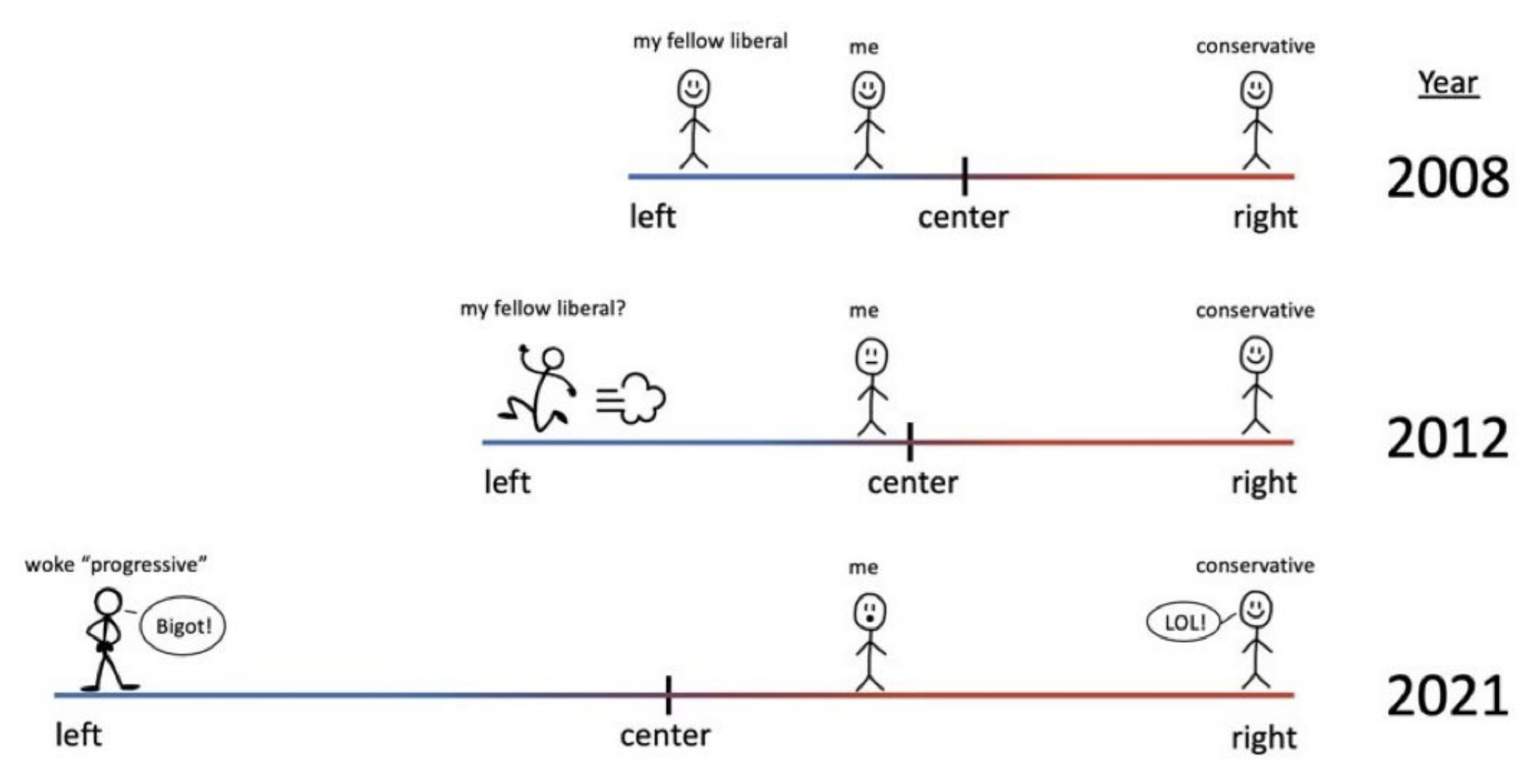
For a start, I don't believe Musk will use Twitter to advance right-wing candidates or policy. He recently tweeted "I strongly supported Obama for President, but today’s Democratic Party has been hijacked by extremists." He also tweeted a cartoon showing him not changing his views since he supported President Obama in 2008 while the left and right have diverged. Don't forget that Musk (and many others) resigned from Trump's American Manufacturing Council and Strategic and Policy Forum shortly after they were formed. 

Musk sounds more like a pro-Obama centrist than a right-wing extremist.

The algorithms

Musk has said he wants "to make Twitter better than ever by enhancing the product with new features, making the algorithms open source to increase trust, defeating the spambots, and authenticating all humans.” I am all for defeating spambots and authenticating (not "identifying") humans but open sourcing the algorithms that rapidly decide which tweets to present to a given user is insufficient. The goal, the objective function, of current social media algorithms is to increase engagement and therefore advertising revenue and that has had catastrophic side effects.

In the early 1990s, the US National Science Foundation Network, which was central to the nascent global Internet, had a policy limiting acceptable use to supporting open research and education. Most of us were naive when that policy was phased out, but by 2011, when Eli Pariser published The Filter Bubble, the danger of an Internet financed by personalized advertising was becoming clear, and terrorists were using the Internet for operations and recruiting. In 2014 Aljazeera was asking whether Facebook was amplifying hate speech and violence against the Rohingya and there was evidence of Russia hacking US elections as early as 2008. That was nothing compared to subsequent presidential elections or Russia's Ukraine war propaganda. 

The objective function of today's social media algorithms must be changed -- for example by adding goals like reducing political division or increasing voter participation rate. This is an ill-defined, challenging problem, but that is nothing new for Musk. It would also reduce Twitter's revenue and Musk is a businessman, but he is motivated by more than increasing profit and shareholder value.

Musk has the technical skill in his current companies to implement and maintain Twitter algorithms. One of his companies, Neuralink, is working on understanding the brain and SpaceX satellites and Tesla cars rapidly process large amounts of data to make decisions to avoid collisions. He and his employees are well versed in decision-making technology, but he will need people with backgrounds in marketing, social science, and politics to revise the algorithms to incorporate social goals. 

Musk is a manufacturing and design genius and a manager with an unprecedented span of control who is nevertheless deeply involved in project details (as illustrated in this interview), but he lacks the temperament and judgment to revise the Twitter algorithms. (He has described himself as autistic and is prone to unrealistic predictions and sophomoric tweets).

Musk needs trusted advisors if he plans to revise the Twitter algorithms. How about President Obama? He would bring empathy, wisdom, and political skill to the project, and, as evidenced in a recent talk at Stanford University, he understands the problems with today's social media algorithms and considers them to be a threat to democracy as well as causing more concrete damage like killing people by spreading COVID misinformation.

Musk and Obama have complementary skills, and if social media can be modified and saved, I can't think of a better team than them to do it. If Musk is unwilling or unable to engage President Obama as an advisor, how about a podcast like the one Obama did with Bruce Springsteen? Coming back to reality -- Musk should at least invite Obama to visit Twitter and give a talk to and engage with the Twitter staff. 

Update 5/7/2022

I learned something after writing this post that has increased my optimism. 

Twitter has a company-wide initiative called Responsible Machine Learning (ML), based on the belief that "responsible technological use includes studying the effects it can have over time" and the fact that with hundreds of millions of Tweets per day Twitter's design can have unintended consequences. 

Twitter's Machine Learning, Ethics, Transparency, and Accountability (META) group is responsible for understanding the impact of ML decisions and applying what they learn to improve Twitter. In 2021, Twitter co-founder and CEO Jack Dorsey and the board of directors made Responsible ML one of Twitter's main priorities. META group funding was increased, and prominent researchers were hired. They have access to Twitter's data, the decision-making algorithms, and the people who design them.

But, isn't Elon Musk a "free speech absolutist?"

Yes, he tweeted that, but how much thought went into the tweet, and what exactly does he mean by it? I don't know, but I do know that Musk is iconoclastic and willing to question himself. When speaking or being interviewed, he seems at times to pause, to debate with himself before making a statement or giving an answer. During a recent in-depth interview, he listed his engineering principles, beginning with a recognition that “Everyone’s wrong. No matter who you are, everyone is wrong some of the time.”

I can't think of any team better qualified to mitigate social media dysfunction than Twitter's META group, the technicians with access to the current algorithms and data, and Elon Musk. (And maybe President Obama).

Finally, here is a little more optimistic speculation:

Jack Dorsey: 
  • Called Musk "the singular solution he trusts".
Bill Gates:
  • “You wouldn’t want to underestimate Elon. What he did at Tesla is amazing, helping with climate change, what he did at SpaceX ..."
  • “I don’t know specifically what he’ll do, but there’s an opportunity, and we need innovation in that space.”
Elon Musk: 
  • “The goal that I have, should everything come to fruition with Twitter, is to have a service that is as broadly inclusive as possible, where ideally most of America is on it and talking.”
  • "I don't care about economics at all.

Friday, September 23, 2016

Football streaming on Twitter -- too many commercials and need to be able to filter tweets -- but like all new media, it will improve.


I watched a bit of Thursday Night Football on Twitter last night. You could watch a small screen with tweets as shown above or go full screen and lose the tweets. I watched it on a laptop with a large, high resolution screen and on a Mac with a 21-inch display and the video was smooth and looked good on both. That was the good news.

The bad news was the commercials. I am not a football fan, so do not know how many commercials a typical broadcast game has, but it seemed like Twitter spent more time on commercials than the game. I would be curious to see statistics on the number of minutes spent on commercials, commentary and game action on Twitter versus broadcast television.

I “cut the cord” years ago, so am used to paying Netflix and others for streamed content without commercials. If I am typical, Twitter will fail with this commercial-based business model. (The Motley Fool Web site says the ads did not pay off in the first game, which was streamed last week).

For a while, I watched both the TV broadcast and the Twitter stream. The Twitter stream was relatively delayed, but the lag time varied and they did not have the same commercials. I wonder how the commercial sales and revenue are handled.

Turning to the user interface – I did not time it, but it seemed like there about 20 tweets every thirty seconds. With that many tweets coming in, I think the best way to watch would be to go full screen during the live play and mute the audio and read tweets during the commercials -- not a good deal for advertisers.

I did not notice any obviously malicious tweets, so I assume there is some automatic or human filtering, but it would be better if they would let the user control the filtering. For example, to let one see only tweets from a selected group of friends or a selected group of experts like professional football players, sports analysts or professional gamblers.

But, lest I seem too negative -- this is their first try at streaming sports. All new media stumble at first, often copying what came before. The first movies were made by filming stage plays and there are many other examples from radio, TV, textbooks, online learning, etc.

Twitter is streaming the US presidential debates next -- let's see how they do on that.

Wednesday, May 08, 2013

Citizen journalism and television coverage of the Boston Marathon bombing

Citizen journalism on the Internet began before the invention of the Web. Today it is a significant source of news. Emily Tolan's nine minute video on the Boston Marathon bombing illustrates the interplay between citizen journalism and television.

The video is a chronological summary of events beginning with the explosions caught on cell phones and ending with Twitter and TV coverage of the capture of the second suspect.


For more on citizen journalism, check these teaching presentations.

Sunday, September 04, 2011

Get a free copy of Twitter for Good -- a how-to for organizations with social goals

When Twitter started up, its prompt question was "What are you doing?" A lot of early traffic was simple answers to that question -- interesting to your friends perhaps, but not particularly significant.

The prompt today is "what's happening?," which solicits a broader class of comment.

There are many stories of inventions that came to be used in ways their creators did not envision, and Twitter is one of those. In the preface of Twitter for Good, co-founder Biz Stone tells the story of James Buck, a photo journalist covering Egyptian demonstrations. When Buck was arrested during a demonstration he tweeted one word -- "arrested." The word spread via Twitter to his colleagues and diplomats, and within hours he tweeted again -- "free."

It is now clear that Twitter can be used for more than telling friends what you are doing. It has been used for disaster relief, political organizing, live reporting of events, as a broadcast medium for popular figures like athletes, actors, politicians and journalists, even, sadly, for coordination of terrorist activity.

Twitter for Good is a how-to book with tips and case studies for organizations and individuals that want to use Twitter for good. It's oriented toward social action, but many of the recommendations are also relevant to any organization that wants to use Twitter for public relations, marketing, and customer or community relationship management.

I have only skimmed the book, so cannot write a full, critical review, but, if it sounds interesting, you can get a free copy. Starting at 12:00 AM (midnight) on Tuesday, September 6, 2011 an electronic version of the book will be available for download at Amazon and Barnes and Noble. Click on the Kindle (Amazon) or Nook (B&N) edition, then purchase them for free. The B&N version is in ebook format.

The offer is good for 24 hours. If you miss the free copy, all is not lost -- you can enter to win a copy here.

Saturday, June 04, 2011

The Net is back up in Syria -- why did they take it down? Why reconnect?

As shown in this graph from Renesys. Syria, like Egypt in January, was disconnected from the Internet for 28 hours, but is now back online.

Why did they take it down? Why did they reconnect it?

I am sure the takedown was under consideration and debated internally for some time. The deciding factor may have been the world wide revulsion at the YouTube video showing the tortured and mutilated body of 13-year old Hamza Ali al-Khateeb. (A good place to read about that is David Brooks' commentary on it in the New York Times. If you want to see the video itself, you can find it on YouTube. I've not watched it -- Brooks' description was sufficient for me.)

Why did they reconnect to the Internet? Perhaps they realized the futility of stopping the flow of information into and out of the country, as illustrated by this tweet:
@MadeInSyria Dial up access for #Syria: +46850009990 +492317299993 +4953160941030 user:telecomix password:telecomix, 11 hours ago
Perhaps it was the dictator's dilemma -- Syrian economic institutions had grown too dependent upon the Net to cut it off. Regardless, it is back up and the Twitter stream for #syria is again reporting on the situation, for example:
@MalathAumran: Hama reports tens of tanks gathering about 60 at the southern entrance of the city #Syria, 1 hour ago

@jenanmoussa: Ten dead as helicopter opens fire in #syria(n) city of #Edleb: al arabiya, 2 hours ago

@weddady: 63 peaceful protesters killed yesterday by the regime of Bashar Al-Assad in #Syria.. in other news, the world is watching.., 2 hours ago

@MalathAumran: Idleb: Military helicopters are shooting randomly on Jisr Alshghour city for half an hour now. more details @ http://j.mp/j2wR3s #Syria, 2 hours ago

@guardian: Syrian forces kill 70 protesters http://gu.com/p/2ph93/tw #Syria
2 hours ago

@FlashNewsPlus, #Syria: extremely disturbing report from witnesses that wounded are being taken from Al Badr hospital in #Hama and killed. via @MalathAumran, 8 hours ago
Messages like these are being read by government leaders and citizens around the world, and they cannot easily be ignored. They are also important for the people in Syria who can know what is going on in cities other than their own.

The Syrian government would like to suppress this news, but they cannot. Do they now wish they had reined in the Internet from the beginning, as, for example, Cuba did and continues doing? Cuba has paid a price for that decision, but it may have helped prolong Castro's regime.

Saturday, January 29, 2011

Before the Twitter revolutions, there was the Usenet revolution


Polina Antonova and Eugene Peskin operating Kremvax, the link between
Relcom and the West

The first example of relatively large-scale citizen journalism online was during the August 1991 coup attempt by eight high-level Soviet officials. There were two days of confrontation between demonstrators and troops, during which all Russian media except Usenet news groups were shut down by the authorities. Usenet, a precursor of today's Internet discussion forums, carried traffic into, out of and within Russia (70 cities) during the days of the coup attempt.

One of the quotes from that time foreshadows subsequent attempts to shut the Internet down. Polina Antonova of RELCOM, the Unix distributor that operated the network wrote:
They try to close all mass media, they stopped CNN an hour ago, and Soviet TV transmits opera and old movies. But, thank Heaven, they don't consider RELCOM mass media or they simply forgot about it. Now we transmit information enough to put us in prison for the rest of our life.
After two tense days, the coup failed and president Mikhail Gorbachev was restored to power. For more on the role of the network during the coup attempt, see:
The following video clip (3:13) was part of a documentary on the Internet. (It includes a short interview of me at the time -- no white hair :-).


Usenet played a relatively significant role during the Soviet coup attempt, but there was also some Usenet traffic during the 1989 Tienanmen Square protests. Everyone is familiar with the heroic image of the unidentified man stopping a column of tanks on June 6 1989 -- the day after troops had opened fire on protesters.


But, there was some Usenet traffic as well. Olivier Crepin-Leblond has saved a description of the situation that was posted by a Sun Microsystems employee on May 23. It describes the optimistic time before the storm, beginning with:
The situation here seems getting better and better. All army members are blocked outside Beijing city. The people’s life in the city looks as normal as usual.
Here is a movie clip of the tank man at Tiananmen Square:


This clip was not on the Internet at the time, but it is today -- providing a dramatic view of a heroic act and illustrating the futility of China's attempt to erase the memory of the event.

-----
Update 8/20/2016

Slate has published a relatively long post entitled "An act of courage on the Soviet Internet" on RELCOM's role during the Soviet Coup attempt of 1991. The article describes my involvement at the time, but fails to link to the archive of the network traffic and other material, which is available to historians and others interested in the event.

I believe this was the first example of active citizen journalism involving the Internet. The Internet has given us a means of documenting historical events in detail -- "big data" for historians. We need a mechanism for discovering and preserving such archives.

-----
Update 1/12/2017

Mark Graham, who relayed news over the Sovam Teleport link during the Soviet coup attempt, just sent me an article on their activity at the time. Unfortunately, the data they transmitted and received has been lost. Our archive is still online at the State University of New York site mentioned above and, even better, it is online at the Internet Archive.


-----
Update 7/7/2018

For an excellent article on the role of RELCOM in the Soviet Coup attempt, click here.

Thursday, September 02, 2010

How does Twitter select Trending Topics?

This morning around 6 AM, PST, I noticed that the newly announced Samsung Galaxy tablet was at the top of Twitter's world wide Trending Topics list.  It was also at the top of the United States list and number two in the UK.

But, it was not even listed in the top 10 for Los Angeles.  I figured that was because it was early in the morning, so I checked New York and London.  Nothing.

It turns out that the Samsung tablet was not listed in the top 10 of any of the cities listed by Twitter:  Atlanta, Baltimore, Boston, Chicago, Dallas-Ft. Worth, Houston, London, Los Angeles, New York City, Philadelphia, San Antonio, San Francisco, Seattle, São Paulo and Washington, D.C.

Half an hour later, the Galaxy had replaced Stephen Hawking as number one in the UK, but it was still not in the top 10 for London.

Twitter says they will sell the 11th spot on the Trending Topics list to a term that is in the top 1-200.  Do they also sell spots on the top 10?  If they are selling Trending Topic spots without identifying them as paid, will their credibility be undermined?

Saturday, May 29, 2010

Positive results using Twitter and a wiki in a collaborative writing assignment

Last semester, I used Twitter and a wiki to illustrate collaborative writing and the writing of short documents in a Network News assignment. The student response was positive, so I will repeat the experience.

I started a class Twitter stream for links to current events relevant to our class. I told the students to follow the feed, and posted about 125 items during the semester.

The writing assignment was near the end of the term. Each student selected a particularly interesting post, and summarized it and its relevance to the class in a short document. Once the summary documents were polished, the students added them to a wiki page, creating a collaboratively authored Network News report for the term.

For more detail, see this post on the assignment and survey results.