Sunday, September 08, 2013

Nature study: Gaming improves multi-tasking skills in older subjects

As Socrates, Doug Engelbart and many others have noted, we shape our tools, then they shape us. Writing was a useful invention, but our memory has suffered from it. Calculators are handy tools, but my students are not so great at doing arithmetic in their heads.

Like any other medium, the Internet is changing our cognitive abilities. We remember fewer phone numbers now that we have smart phones and when online we read quickly, superficially and carelessly, focusing our attention on the upper left hand portion of the screen. Our attention spans have been reduced and there is evidence that multitasking is inefficient.

But, it is not all bad news. Anyone who has watched a child construct 3-D worlds in Mindcrafter knows that they are masters at storing mental models of complex structures and navigating through them. There have also been studies showing that video game players are faster at making some kinds of decisions than non-gamers. (I bet basketball point guards, baseball players and football quarterbacks are great video game players).


A team of researchers led by Adam Gazzaley at UC San Francisco has just published a study showing improved cognitive ability in older people after practicing with a specially designed video game called NeuroRacer.

Playing the game helped older people multitask by improving their working memory and sustained attention. As their skills increased, so did activity in the prefrontal cortex of the brain, which is associated with cognitive control, in a manner that correlated with improvements in sustained-attention tasks. Activity also increased in a neural network linking the prefrontal cortex with the back of the brain.

The study was published in Nature and you can hear a podcast on it here and see a video summary here.

Studies like this one strike me as rather "brittle" -- focused on narrow abilities from which it hard to generalize, but the research is just beginning.

Saturday, September 07, 2013

Surveying the (changing) experience of our students

I teach a class on digital literacy in the Internet era, and the backgrounds and digital experience of my students change every year. (See the Beloit College Mindset List for general changes in student backgrounds).

As such, I start the term with a student background survey, which serves three purposes 1) I use the survey results to assign the students to study groups 2) to let the students see how their background compares with others and 3) to provide an example of an Internet-based service -- online survey processing -- which we can discuss in class.

You can see this term's survey results here. (I've omitted the answers to open-ended question like what is your major (they vary considerably), what audio, video or image editor do you use (most answer "none" to all three) and what is your relevant work experience).

I would appreciate suggestions for changes to my survey -- what else would be useful and informative to know?

Do you conduct a similar survey? If so, what do you ask?

-----

Update 9/8/2013

Thirty three freshmen, one sophomore, seven juniors and fourteen seniors completed the survey. Their majors were:

Tuesday, September 03, 2013

It's not easy to leave Godaddy

A few years ago, I started a blog for old athletes. It has been dormant for a while, but I hope to restart activity on it some day, so I have hung on to the domain name oldathlete.com.

It was about to expire, and I decided to move it from Godaddy to Hover.com.

It turns out that to do that, you have to turn off domain locking and jump through a few other hoops. I jumped through the hoops, but when I tried to unlock the domain, I got this dialog box on the Gogdaddy site:


No problem, I just clicked the off radio button, but as you see, the option to save that setting turned off.


Its not easy to get out of Godaddy's roach motel.

Thursday, August 29, 2013

San Jose State and Udacity release results for summer pilot courses

San Jose State University (SJSU) and Udacity have run two rounds of trial online courses. The pass rates in the first round were poor, but a press release from SJSU and a blog post from Udacity report improvement in the second trial, which was run this summer.


As you see, the pass rates were better in the summer than the spring for every class and the online students in two of the summer classes had higher pass rates than on-campus students.

Both Udacity and SJSU say they are "encouraged" by these results, but there were differences between the terms that confound the data and make it difficult to explain, say, the improvement in elementary statistics or the poor results in entry level math. The three courses that had been offered in the spring were revised, but the numbers of students in the classes and their backgrounds and motivations were also substantially different.

For example, the spring classes were relatively small and the students were all trying to earn credit. In the summer, there were more students and their motivations varied, as shown here:


This is not surprising. I have noted earlier that college credit motivates relatively few MOOC students and, in fact, non-credit students may turn out to be the most important audience for and customers of online classes.

The results of this trial are far from definitive, but this is a time of rapid innovation and such experiments are to be encouraged.

Speaking of innovation, I cannot bring myself to conclude this note without pointing out that "passing with a grade of C" seems like a poor metric for "success" in a course. That is the traditional university criteria, but the Internet gives us the ability to break courses into fine-grained modules and to provide more precise, informative measures of success.
-----

Update 9/12/2013

San Jose State has released a report on the Udacity experiment entitled "Preliminary Summary SJSU+ Augmented Online Learning Environment." The report author is not the preliminary investigator for the study, Elaine D. Collins, but was written "for" her by consultants at the RP Group.

It is reviewed in two posts:

1. Chronicle of Higher Education, "Few Surprises in NSF Report on San Jose State U. Test of Udacity Courses article"

2. Inside Higher Ed, "After weeks of delays, San Jose State U. releases research report on online courses"
_____

Update 11/18/2013

The academic senate at San Jose State is considering a resolution to restrict the power of the administration to unilaterally enter into course contracts -- to keep control with the academic departments.
The Academic Senate is expected to vote on Monday on a proposed policy that would forbid the university to sign contracts with outside technology providers without the approval of tenured and tenure-track faculty members in whatever department would be affected.
-----

Update 11/25/2013

The Chronicle of Higher Education interviewed two leaders on opposite sides of the MOOC debate at San Jose State and they discover common ground. Anti-MOOC professor Peter Hadreas learned that pro-MOOC professor Khosrow Ghadiri has been using MOOC material to run a flipped class -- not merely having students enroll in a MOOC -- and that it is very labor intensive, taking 80 hours per week. They agree that pedagogical innovation and experiments are good things.

I also noted that one of the professors is an engineer and one is a philosopher. Can you guess which is which? Which do you think spends 80 hours per week on his teaching?

-----

Update 12/13/2013

Georgia Tech designs its Udacity pilot to avoid failure. They distance the themselves from Udacity's debacle at San Jose State University.
-----

Update 12/18/2013

San Jose State will resume their testing of the material developed for three online courses -- Elementary Statistics, Introduction to Programming and General Psychology in the spring semester. Enrollment will be capped at 70 students for the statistics class, 150 students for the programming course and 35 students for the general psychology class. At least half of the seats for programming and statistics will go to SJSU students and the rest will go to CSU students on other campuses. The course will use SJSU's LMS, Canvas. This sounds like a traditional online class using the material that was developed for the Udacity trial.
-----

Update 2/2/2014

In the fall of 2012, students in two traditional sections of an introductory electrical-engineering course earned passing grades at rates of 57 percent and 74 percent, respectively. In an experimental third section, which was “flipped” to incorporate the MIT videos, the pass rate was 95 percent, but they did not adhere strictly to the MIT material.

In the spring of 2013 they also ran three sections, one of which used edX content. In the traditional sections, students passed at rates of 79 percent and 82 percent. In the experimental section, the pass rate was 87 percent.

The spring experimental section followed the MIT curriculum than did the fall 2012 section -- they covered more material.

The professor, Khosrow Ghadiri (mentioned above), said the pass rates of the spring-2013 trial should not be compared with those of the fall-2012 trial because the students learned different material and took different examinations. In the fall, he used the MIT content to help teach his own syllabus. In the spring, he used the MIT professor’s content and learning objectives.

Wednesday, August 28, 2013

Al Jazeera bucks the IPTV cord-cutting trend

We hear criticism of US TV news. Local news tends to feature a lot of "if it bleeds, it leads" stories about crime and police chases. National cable news is highly partisan. Network news is redundant and sound-bite driven.

Al Jazeera has started a new cable offering, Al Jazeera America, which they say will present serious, in-depth news from a global perspective. That sounds pretty good to me. (For more on their coverage philosophy, plans and staff, check this recent OnTheMedia podcast and transcript).

But, it turns out that the cable/satellite companies strong-armed them into dropping their Internet-streaming news service in return for being carried:


So, folks who want Al Jazeera news are now forced to get it as part of an expensive bundle on satellite or cable. As a cord cutter, I am out of luck.

Monday, August 26, 2013

Technology imitates art -- why Google switched to Web encryption (https)

I was struck by a cool exchange while listening to a This Week in Google podcast. The topic was security and privacy and the exchange was between hosts Jeff Jarvis and Leo Laporte and their guest Matt Cutts, a Google engineer.

The exchange (1 min, 10 sec) began with Jarvis asking Cutts what led to Google's deciding to use encryption (HTTPS) for Web requests.


It turns out that Cutts had the authority to pursue the change on his own. He decided to switch to HTPPS after reading Cory Doctrow's Little Brother. He was also influenced by Chinese hackers having attacked Google in 2009.


This is a cool example fiction influencing the real world -- reminiscent of the role the StarTrek communicator played in the development of the flip phone.


Of course the Star Trek communicator is not the only example of life imitating life -- Star Trek also featured touch screen tablets long before the iPad came out.


I don't know if the iPad designers were thinking about Star Trek tablets, but they certainly had seen Knowledge Navigator a widely viewed concept video produced by Apple's higher education group. (The Knowledge Navigator video is preceded by a one-minute introduction).


As you see, this video depicts a tablet with voice recognition and considerable "intelligence." What will Siri and Google Now be like in twenty years?

Going back to the early 1800s, the Jaquard loom, which was controlled by punch cards, was capable of automatically weaving intricate tapestries like the one shown here:


Charles Babbage was familiar with the Jaquard loom and owned one of the Jaquard portraits. That led to his automating of computation in his Analytical Engine -- the precursor to our programmable computers.


Can you think of other examples where art has inspired invention or scientific discovery?


Sixty Minutes segment -- say goodbye to anonymity

Scott McNealy (1999), then Sun Microsystems CEO: "You have zero privacy anyway. Get over it.”

Eric Schmidt (2009), then Google CEO: “If you have something that you don't want anyone to know, maybe you shouldn't be doing it in the first place."

CBS Sixty Minutes (8/25/2013): "Say goodbye to anonymity."


With all the security flap surrounding Bradley Manning and Edward Snowden, I posted a note on face recognition. I have updated that post several times, and the latest update seems worth an independent blog post:

Last night CBS Sixty Minutes broadcasted this segment on face recognition.


The video and a transcript are online and the segment tag line, "say goodbye to anonymity," reveals the editorial slant.

Think of all the people you have identified and who have identified you in Facebook or Google Plus photographs. They are a database against which to run a facial recognition algorithm and once they have recognized a face, they can match it to the profile of interests, demographic data, likes and dislikes of that person.

Sixty Minutes emphasized commercial applications -- receiving a discount coupon for your favorite beverage seconds after you walk into a restaurant or seeing personalized ads at the mall.

They also mentioned the database of photographs of criminals the FBI is ammassing. By next year they expect to be able to search by face as well as fingerprint and DNA.

The Web site includes a video segment titled "Facebook and the FBI," which was not broadcast.


The FBI representative says all the right things, but these days government credibility is not all that high. As Bruce Schneier points out in this Atlantic Monthly article, the government is relying on industry to do its surveillance.

Does any of this worry you? How long until Google or Facebook gets a court order demanding to know where you were yesterday afternoon?


Sunday, August 11, 2013

Apple patents the ability to disable mobile cameras and connectivity

Apple has a patent that would let police or others turn off mobile cameras and wireless communication.

I am not a constitutional scholar, but don't we have a right to record the acts of police in public places? To capture images like these:


The photos show police using dogs and fire hoses during civil rights demonstrations in Birmingham, beating Rodney King, killing of Kelly Thomas and using pepper spray at Occupy Wall Street.

While the patent does use "covert police or government operations" as an example of an application, it also mentions legitimate applications, for example, stopping cameras in a locker room or other place where one has a reasonable expectation of privacy.

As is the case with many technologies, we should control its use, not its existence.

Saturday, August 10, 2013

ACLU summary of NSA surveillance actiivty

I have not posted anything on Edward Snowden or the activity of the NSA, because so many others are doing so; however, I have found a relatively concise summary of the NSA surveillance activity with links to many supporting resources. It is a good way to catch up with the story.

Note that it was published by the American Civil Liberties Union, so focuses on violation of privacy guarantees. I would love to see a similar summary with supporting resources that is focused on positive outcomes as a result of NSA surveillance.

Thursday, August 08, 2013

Google Chromecast delay -- production or legal or hardball?

It may have been a data input error or perhaps Amazon has been hacked, but I received an email on August 8 saying the Google Chromecast I had ordered on July 27 would be delivered in mid October.


I checked the Amazon Web site, and, sure enough they were now saying it "usually ships in 2-3 months:"


As we noted last week, the first production run sold out in a few days, and, at the time I placed my order, they said it would ship in 3-4 weeks:


On August 3, they seemed to be on schedule:


This is a simple electronic device -- why are they having so much trouble?  Why did the shipping date slip?  Are they poor production planners?  Having trouble getting parts?  Having legal problems? Playing hardball with Amazon?

If it is legal problems, it may be a trademark conflict with Chromecast.com, a Web development company.  Here is their Web site:


Note the link to legal information near the bottom of the screen.  Follow the link and you will see a lot of legal information.  There is also some very faint black-on-blue text at the bottom of the page.  It is illegible on my display, but here is what it says:
© 2013 Chromecast Inc. All rights reserved. Chromecast, Chromecast Digital Media, chromeTone, The rADium LDAP suite, and project|aurora, are trademarks of Chromecast Inc. and may not be used without written permission.
Did Google forget to get that written permission? If so, the can always change the name to "Metro."

Perhaps they are just playing hardball with Amazon.  It turns out the Google Play Web site still says the Chromecast ships in 2-3 weeks.  If they cut Amazon's quota to induce people like me to cancel their Amazon orders and order from the Google Play Store, they may gain a few sales, but, as a Google customer, that strikes me as doing evil.

-----

Update 8/9/2013

At first I thought my Amazon delivery date may have been an error, but a day later, Google is still promising 2-3 weeks for shipping, Amazon 2-3 months and Best Buy is just out of stock period:


This pisses me off a bit and must also rankle Amazon.  At $35, there cannot be much (any?) profit in a Chromecast, so it seems foolish.  I guess Google wants me to cancel my Amazon order, but I'll wait till Amazon ships it in October.

-----

Update 8/10/2013

Amazon sent out an email saying "customers who placed orders prior to August 7 should receive their orders in the coming weeks and into mid-September." The expected ship date for new orders remains 2-3 months.

Monday, July 29, 2013

The largest data center in Los Angeles sells for $437.5 million or $660 per square foot


From the outside, One Wilshire looks like an ordinary office building.  About a third of the building is occupied by offices, but the rest is an Internet exchange point and data center -- full of routers and servers belonging to about 300 voice and data service providers. It is the key US hub for connection to Asian undersea cables. That makes it some of the most expensive real estate in the world,  It just sold for $437.5 million.

Conduits rising from the pavement give a clue that this is not an ordinary office building.

LA Times photo

Moving inside, we see the "meet me room," where networks exchange data. This is one of twelve images in an exhibit by the Center for Land Use Interpretation.

`
If you like lurking inside large data centers, check this photo tour of a Google data center.  Here s a sample image:

The Syncom satellites and Arthur C. Clarke

The LA Times ran a cool article on the development of the Syncomm satellites. Syncom 1 failed, but Syncom 2, which was launched 50 years ago on July 26, 1963, succeded in transmitting voice and image-only TV, and President Kennedy used it for a call to the Prime Minister of Nigeria in August 1963. Syncom 3, which launched August 19, 1964 was used to telecast the 1964 Olympic Games.

The Times article describes the three Syncom engineers, shown below, and their project.


The Times article relates the trouble they had selling the project, but in retrospect, it ended up being a very small investment that launched an industry and re-shaped global culture. (It was similar to the Internet in that respect). The article also contains an interactive graphic showing the satellites currently in orbit.

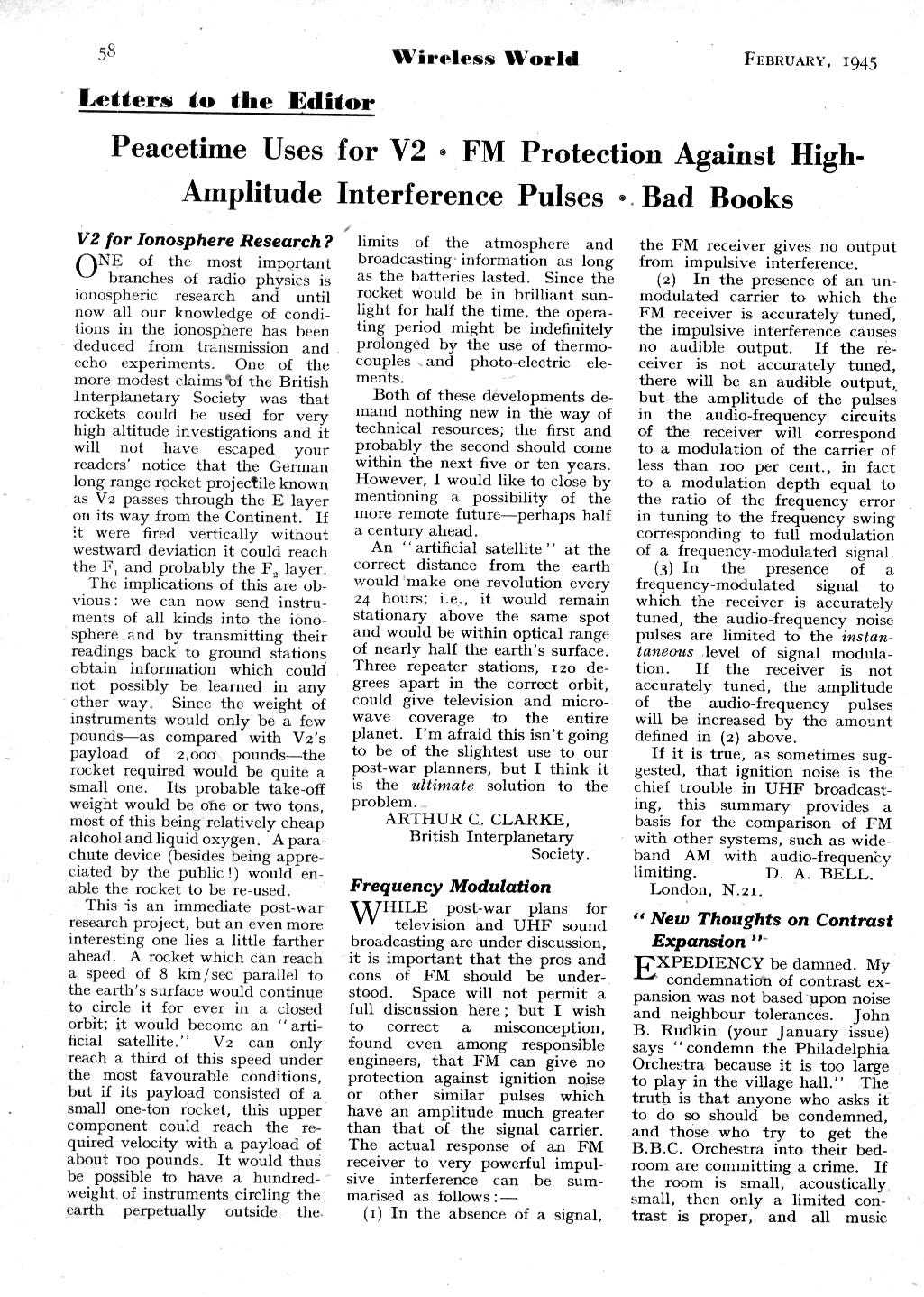
My only criticism of the article is that it gives the impression that the lead engineer, Harold Rosen, was the first to conceive of a geostationary communication satellite. That concept was suggested by others and fleshed out and popularized as a communication tool by the famous science fiction writer Arthur C. Clarke in a 1945 letter to the editor and subsequent article in Wireless World Magazine. This graph, from Clarke's article, shows the equilibrium altitude for a geosynchronous satellite:


So, in addition to reading the LA Times article, I'd recommend checking these out:

Time flies -- the Earth now has a fiber-optic nervous system that far outstrips communication satellite capacity. That would have been hard to predict in 1963, but if you think Arthur C. Clarke would have been surprised, read his book on the cabling of The Earth, How the World Was One.

Saturday, July 27, 2013

Chromecast blunders -- does Google need a few MBAs?

Google's new Chromecast, a device for streaming video on a TV set, might turn out to be terrific, but they have bungled the marketing and production.

I was on the Yet Another Tech Show podcast Wednesday and, based on what they had read, all the panelists agreed that Google's new Chromecast was a terrific product at a no-brainer price.  So, being a cord cutter, I ordered one.

After I placed my order, I learned that I had missed the deadline for a three-month Netflix credit premium. I was satisfied with the purchase at first, but now I am somewhat pissed at Google for giving all those folks who ordered a few days earlier a better deal.


It also turned out that Google blew the production planning -- my Chromecast is expected to ship in three or four weeks.


I came across a tweet saying that nearly 250,000 people had ordered them before the Netflix promotion was pulled -- who plans logistics and production?


I had to wait, but it will be worth waiting for, right? I hope so, but astute blogger Bob Cringley suspects that the Google demo overstated the capability of the Chromecast and when I checked the customer reviews on Amazon, I found that, while most are favorable, there is some dissent.  Some folks could not get it to work, experienced poor quality audio or video or discovered that they needed a second port to power the device if they had an older TV with pre-version 1.4 HDMI ports.


I didn't cancel my order -- I still hope to love the thing, but I can't help wondering if Google, with all their PhD engineers and scientists couldn't use a few more folks with MBAs in production management and marketing. Remember the Nexus Q?

Monday, July 22, 2013

Review of online coverage of the 2013 Tour de France from NBC and ITV4 (UK)

I watched the Tour de France online again this year. (My reporting on the Tour from last year). In order to compare NBC's coverage in the US with that of French ITV4, I subscribed to NBC's US coverage ($29) and also watched ITV4 via an English proxy server. Both used the same video feed, but differed in several ways -- lets's look at some of the main differences.

Video players and interaction

The NBC player ran in its own Silverlight window as shown here:


Zooming in on the controls, we see (from left to right) that the user can share a link on Facebook, Twitter, etc., adjust the speaker volume, rewind 15 seconds with a single click, see how far behind the live stream they are on the timeline, jump to the live stream, reveal running commentary (tweets) and links to highlight videos and go full screen.


I preferred to leave the running commentary and links to highlights hidden, but here is a screen shot with them revealed:


NBC used what seemed to be the same player in the 2012 Tour de France, and you can see a more complete description here.

The NBC experience was far better and more interactive than that of ITV4. ITV4 emulated watching TV, merely displaying a live video stream inside a Web page. As you see in this screen shot, the user could only stop/watch the live stream, adjust the volume or toggle between full screen and windowed mode.


NBC clearly has a better, interactive video player.  It may be that ITV4 just streamed the live stream because there was a large fee for the right to archive it.

Streaming performance

My laptop has 8GB of memory and a solid state drive and my cable service is typically 15 Gbps, but my three year old CPU/graphic controller is not up to the task of watching full screen video on a TV set, so I did most of my watching on the laptop screen.

When I tried to go to full screen on a TV set, the CPU fell steadily behind, whether I was watching NBC or ITV4 or using Chrome, Firefox or Internet Explorer.  NBC would begin at its maximum speed of 2.5 Mbps, but it would automatically step down to 350 Kbps, then start dropping frames.   ITV4 did not display their speeds, but they seemed to be about the same and the results were also the same.


This is a temporary issue.  A fast laptop would probably be able to keep up with either and future versions of the player software will be more efficient.

Current status presentation

As shown here, ITV4 provided a nice race status display below the video window. Scrolling down further, you saw the overall standings and standings within categories like mountain climbing and sprinting.  It was convenient and easy to access.


Since the NBC player runs in a separate window, one had to open the video player and a Web browser side by side, as shown here, to achieve the same functionality.


Aligning and sizing the two windows was a bit of a bother.  Since one could scroll down and see pretty much the same current status information on both, I'll give ITV4 the edge in convenience.

Ancillary content and archives

NBC had a lot more ancillary content than ITV4.  They had more prepared material and, since they archived the video, a much richer selection of replays.  Ancillary content was organized as shown in the tabs below.  For example, the Track tab showed the positions of the groups of riders on the course on a Google map.  


NBC easily wins the archive comparison. They saved preview videos and full stage replays for each stage along with 213 stage highlight videos and 37 historical and human interest "tour extra" videos. ITV4 archived only a three minute highlight of each stage and ten short tour extras.  

That is the good news on NBC. The bad news is that they deleted last year's archive shortly after the race and will probably do the same this year. The BBC and NBC also deleted their 2012 Olympic archives.

Amazon taught us the value of "long tail" content years ago, but these guys don't get it. The cost of keeping an event archive online is very small and they are erasing history.

I guess it comes down to money -- couldn't they cover the the costs with ads or access fees? Perhaps the problem lies with the Tour organizers.  I assume NBC had to pay a fee for the right to archive the live stream, which was used to provide the ancillary material and the interactive player described above.  If that is the case, the Tour should keep the archives online.

Advertising

ITV4 drove me nuts with commercials.  (Since I cut the cord a few years ago, I have really come to hate commercials).  You see the same ads every time you load their Web site.  I was surprised to see that the Nintendo Wii was a major sponsor in Europe, but I really got tired of seeing the same stupid ad.


But, that was minor compared to their commercial breaks during slow times in the race.  I counted one time -- they ran nine straight commercials without a stop, which seemed interminable.  (Since both NBC and ITV4 share a video stream, NBC cut to historical or informative videos during the long commercial breaks).

NBC had fewer ads.  Like ITV4, they played two commercials when you first came to the site.  One was a Microsoft ad favorably comparing a Surface tablet to an iPad.  It made the Surface look good, but, after seeing the same ad over and over, it became an irritant.

NBC also had banner ads above the video screen at times, but they were less obtrusive and frequently turned off.  I hardly noticed them, which also makes me wonder how effective they are.


The ads were much easier to take on NBC, but they were irritating, especially so in view of the fact that NBC charged $29 for the event.

That's my summary of the experience.  It is clear that both the technology and the business model are evolving, but the bottom line for me is that I prefer to pay NBC $29 to reduce the number of commercials and to get interactivity and archiving.  Being able to pause, have breakfast and resume where I had left off was enough to sell me.

Friday, July 19, 2013

Low pass rates in the San Jose State/Udacity experiment, but is pass rate a good metric?

Udacity, the MOOC platform company, plans to experiment with on online MS in partnership with Georgia Tech and they have also tried offering a few courses for credit in partnership with San Jose State University (SJSU). The Georgia Tech experiment is just starting, but we have some preliminary results from SJSU.

I got a copy of a portion of a presentation on the SJSU-Udacity experiment. As you see below, they compare pass rates of the Udacity sections with the traditional classroom sessions. The Udacity results are disappointing, but I think "pass rate" is an outdated, pre-Internet metric for these courses. More on that later, but first, here is the presentation excerpt:
In Spring 2013, San Jose State University (SJSU) collaborated with Udacity - a for-profit online start-up - to offer basic Mathematics and Statistics classes. The Udacity leadership appeared in a news conference with SJSU President Mo Qayoumi and Governor Jerry Brown to tout this public-private partnership as a means of increasing both access and graduation rates at SJSU. This same Udacity leadership appeared with State Senate Pro-Tem Darryl Steinberg in the rollout of SB520 and in the presentation of SB520 to the Senate Higher Education committee where they described the collaboration as part of their vision for SB520.

As part of this "experiment" at SJSU, success rates comparing SJSU students in the online version of the three courses versus SJSU students enrolled in the traditional face-to-face (F2F) versions of the same courses were collected. In addition, there were some non-SJSU students also enrolled in the Udacity online courses. Below are the preliminary results of this experiment.

MATH 6L: Remedial/Developmental Math:
Udacity online version: 29% pass rate (14/49 passed; 2 withdrew)
Face-to Face version: 80% pass rate
Non-SJSU students in Udacity version: 12% pass rate (6/50 passed; 13 withdrew)

MATH 8: College Algebra:
Udacity online version: 44% C-pass rate (8/18 passed; 2 withdrew)
Face-to Face version: 74% C-pass rate
Non-SJSU students in Udacity version: 12% C-pass rate (8/67 passed; 20 withdrew; 17 = Unauthorized Withdrawal WU)

STAT 95: Intro to Statistics:
Udacity online version: 51% C-pass rate (19/37 passed; 1 withdrew)
Face-to Face version: 74% C-pass rate
Non-SJSU students in Udacity version: 47% C-pass rate (21/45 passed; 8 withdrew; WU = 9)
The class sizes were small (these were not MOOCs) and the pass rates disappointing, but I am sure they learned from the experience. They are currently offering five classes, and those might yield better results.

But, is pass rate a reasonable metric of success in the Internet era? In my opinion, the notion of "passing" with a C, whether face-face or online, is a flawed metric of success for many courses. As I have said many times before, it is like putting old wine in a new bottle -- using new technology to mimic the past.

If you got a C in an introduction to statistics, you did not understand a lot of what was taught. Maybe you understood descriptive statistics, but not hypothesis testing. Instead of one grade, I'd prefer a fine-grained grading system in which one could, for example, pass "measures of central tendency," then "measures of variability," then "basic probability," etc. In that case, "passing" an introduction to statistics would mean passing a series of ordered modules and understanding all of the concepts and skills presented in the course.

I've been advocating and using modular material for many years, but always within the confines of the standard grading paradigm -- assign a letter grade from A to F for an entire course. With today's technology, we could combine modular teaching material with pass/fail grading at the module level. The technology is the easy part. Breaking up the traditional transcript will be tough.

Tuesday, July 16, 2013

Vint Cerf -- a concise history of packets, the ARPAnet and the Internet

Conceptual sketch of the ARPAnet by Larry Roberts
If you are interested in the history of the Internet and only have 16 minutes to spare, watch this interview of Vint Cerf, who was one of the handful of people that created the Internet.

Cerf's narrative begins with the idea of packet switched communication and runs through the creation of the ARPAnet, followed by the invention of internetworking protocols to link three disparate networks -- the ARPAnet, a mobile communication network and a satellite communication network.

This short video is like an annotated table of contents of the early history of the Internet. Cerf introduces us to Leonard Kleinrock, Paul Baran, Donald Davies, Larry Roberts, Thomas Marill, J. C. R. Licklider, Doug Engelbart, Norman Abramson, Robert Taylor, Charles Herzfeld, Steve Crocker, Jon Postel, Bob Kahn, David Reed, Danny Cohen and Bill Joy, summarizing the work of each and putting it in context.

Whether this is all you want to know about the history of the Internet or you want to use it as a jumping off place to learn more about the contributions of these people, this is a good place to start.

Cerf also conveys a sense of common purpose among those pioneers. He does not say so, but one can think of them as working together to realize Licklider's vision of a network running Engelbart's applications. Cerf makes it clear that, although they worked for several different organizations and changed jobs from time to time, these people knew each other well and collaborated closely on creating the Internet. (For example, Cerf, Postel and Crocker went to the same high school and studied under Kleinrock as graduate students at UCLA). The group also had an excellent collaboration tool -- they were the first users of the networks they built.

The ARPA/Internet project was a great example of government as a non-equity angel investor -- providing a small bit of seed funding ($124 million) to a group of smart, dedicated people, rather than setting up a department to do the work internally.

Charles Severance of IEEE Computer Magazine conducted the interview of Cerf, and it is one in a series of computing conversations.

Saturday, July 13, 2013

A provocative column on Georgia Tech's $7,000 MS in computer science

Astute industry analyst Robert Cringely says that Georgia Tech's $7,000 online MS in computer science is watered down, will cheapen the Georgia Tech brand, will earn Georgia Tech a lot of money, and may be the future of education.

The self-paced (typically three year) program is being developed with Udacity with the help of a $2 million grant from AT&T. They will start with 300 students, many of them AT&T employees, and hope to expand to 10,000 students while hiring only eight new instructors.

Cringley sees this as a recipe for a "crappy" degree, but says it will make a ton of money because professional degree students typically pay for their education while research students provide cheap teaching and research labor funded by grants. He also sees the Georgia taxpayer subsidizing offshore students -- as Cringely puts it "programmers in Bangalore will soon boast Georgia Tech degrees without even having a passport."

It is noteworthy that the courses will be offered as free MOOCs for those not seeking a degree -- only enrolled, degree-seeking students will pay and only they will get tutoring, online office hours, proctored exams, etc. We have talked of the importance of the non-degree MOOC audience in an earlier post. The business model here seems to be counting on for-credit students paying the cost of production, with a by-product of high-quality, free MOOCs.

What do you think? Is programmers in Bangalore getting low-cost degrees a bug or a feature? Will students pay $7,000 for certification from Georgia Tech when they can get the same content in a free MOOC? Will the free MOOCs turn out to be the most important part of this experiment -- particularly in developing nations? How will prospective employers value the credit and non-credit completion of the courses? Can eight faculty adequately serve 10,000 students? Will other universities follow suit?

-----

Update 7/15/2013

Laura Gibbs pointed me to an in-depth discussion of the Georgia Tech MS CS program. Christopher Newfield challenged the economic projections in the Georgia Tech contract, and Udacity co-founder Sebastian Thrun answered in a blog post to which Newfield replied.

Thrun said a couple of things that caught my eye. One was that they predict that the majority of the income will come from non-degree students. We've written about the non-degree student market being potentially much more lucrative than that for degree programs. This venture will provide data on that hypothesis, but it will be a while before we know the results.

Thrun also said that data on the for-credit collaboration between Udacity and San Jose State University (SJSU) had been collected and would be released in a few weeks (from June 24). That should shed some light on the disagreement between Thrun and Newfield in spite of the fact that the students and the introductory undergraduate courses in the SJSU trial differ significantly from those of a graduate computer science degree at Georgia Tech.

We are just starting to innovate in online education after years of textbook facsimiles. Georgia Tech, SJSU and Udacity are experimenting with new models of certification and education financing, as opposed to teaching material and pedagogy. These are early, important experiments.

-----

Update 7/18/2013

SJSU Provost Ellen Junn reported that students in three online classes did significantly worse than those in conventional classes.  A preliminary presentation showed that 74 percent or more of the students in traditional classes passed, while no more than 51 percent of Udacity students passed any of the three courses.  Junn emphasized that the results were preliminary and they plan to start working with Udacity again in spring 2014.

-----

Update 7/29/2013

Slate takes a look at Georgia Tech’s Computer Science MOOC -- says it could change American higher education. - Slate Magazine (http://slate.me/1e67VzV).
-----

Update 8/18/2013

The New York Times says the masters degree is the "new frontier" of study online (http://nyti.ms/1eUs7Fr).  They go on to highlight the Georgia Tech offering and discuss the future of MOOCs more broadly. Enthusiasts and skeptics are quoted. I've also revised the original post -- stressing the inclusion of free MOOCs for non-credit students.
-----

Update 12/13/2013

Georgia Tech designs its Udacity pilot to avoid failure.
http://bit.ly/1hRnZf8
They distance the themselves from Udacity's debacle at San Jose State University.